Cleaning and Sealing Your Deck
Debris clogging the spaces between deck boards is blasted out with a powerful nozzle on a garden hose or a power washer. Products with a base of non-chlorine bleach base or oxalic acid are used to eliminate discoloration and stains. Bleach-based products eliminate mildew, acid-based materials handle graying and stains. But bleach used to kill mildew can also leave a surface drab and washed-out. For these problems, an acid-based deck restoration product is used.
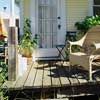 Though some people paint decks with deck paint, most choose
to take advantage of the natural beauty of expensive decking woods
by using a clear or lightly stained finish. If you do choose to
have paint, use a stain-blocking oil or alkyd primer first. In
general, the best finishes are those that soak into the wood,
not those that provide a surface film. A heavily pigmented, solid
stain isn't really recommended for decking because it shows wear
patterns and may peel. You want something that really soaks in.
Though some people paint decks with deck paint, most choose
to take advantage of the natural beauty of expensive decking woods
by using a clear or lightly stained finish. If you do choose to
have paint, use a stain-blocking oil or alkyd primer first. In
general, the best finishes are those that soak into the wood,
not those that provide a surface film. A heavily pigmented, solid
stain isn't really recommended for decking because it shows wear
patterns and may peel. You want something that really soaks in.
There are three important characteristics to look for in a finish. First, the finish should be "water repellent" or "waterproof," not just "water resistant." Second, it should offer UV (ultraviolet) protection. And third, if mildew is a potential problem, the finish should contain a mildewcide, which a "wood preservative" does.
Regular preservatives should be reapplied once a year; newer and better "toner" products offer more UV protection and may last up to four years. Your result will be a deck that provides you with years of lasting beauty and enjoyment.
-- Tips courtesy of HomeAdvisor.com